
Atlanta People Directory Landscape
No single list covers everyone in Atlanta. Each official or institutional directory reflects a defined relationship. A government roster identifies a public role. A campus search covers people affiliated with that school. Property and deed indexes identify owners or parties to recorded instruments, not every occupant. Historical volumes are often the best source for a past resident.
| Atlanta directory | People listed | Keeper | Access route |
|---|---|---|---|
| City Council staff list | Councilmembers and council staff | Atlanta City Council | Free web browse |
| Georgia Tech directory | Faculty, staff, and students | Georgia Tech | Name search, privacy limits |
| Enhanced Property Search | Fulton parcel owners | Fulton Board of Assessors | Free owner, address, or parcel query |
| Professional verification | Georgia-regulated licensees | Georgia Secretary of State | Free individual query |
| City and criss-cross directories | Past residents, occupants, and firms | Fulton County Library | Walk-in collection |
| Business search | Officers and registered agents | Georgia Secretary of State | Free index |
Choose the Atlanta people directory that matches the known fact. A job title belongs in an agency or campus roster. An address fits the assessor or a criss-cross volume. A credential belongs in license verification. When a directory listing points to a government record, the separate Atlanta public records resource explains copies and custodian access.
Atlanta Government Directory Roles
Atlanta government pages are role directories, not a resident registry. The City Council staff directory offers All and alphabetical browse controls, a Select menu, and pagination. Research inspection found 84 entries displayed 20 at a time. Its columns are Staff, Title, Departments, Phone, and Email, though some department or phone cells are blank.
| Staff | Public work name |
|---|---|
| Title | Councilmember, chief of staff, videographer, or another role |
| Department | Organizational assignment when published |
| Phone | Work contact when supplied |
| Published city work address |
Fulton County department pages and elected-official rosters fill the county side. Georgia.gov maintains a state organization directory, while the Team Georgia Directory is arranged by agency and commonly gives a person, title, telephone, email, fax, division, or address.
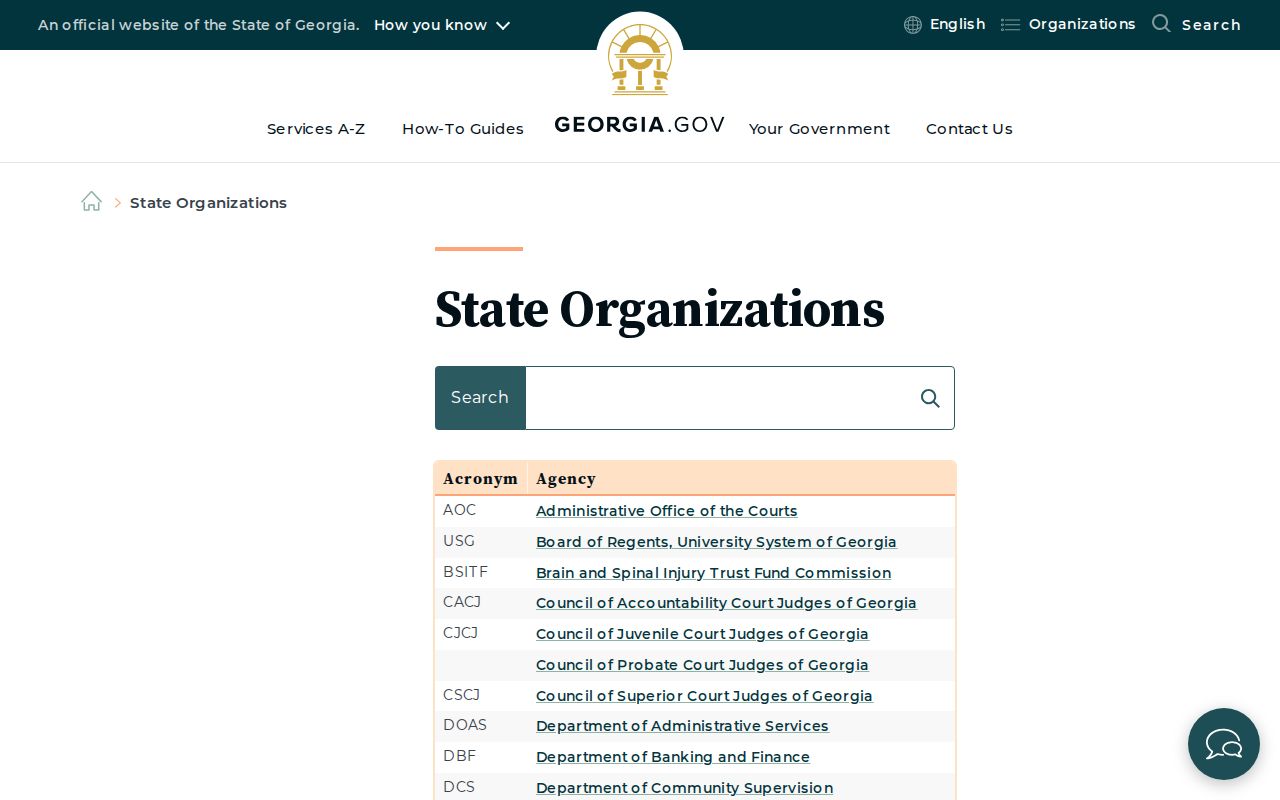
The state page helps route a search to the right agency, but it is not a complete statewide employee-name registry. If a name is absent, use the department's main contact or ask its records custodian for an existing roster.
Atlanta Campus Directory Searches
Education directories reflect current affiliation and privacy choices. The Georgia Tech directory expressly covers faculty, staff, and students. It accepts a first name as optional, requires a last name, and offers Office and Department Listings. The query ignores case and accepts the beginning of a surname; a two-character surname also needs a first initial or name.
| Search field | Input rule | What it does |
|---|---|---|
| First name | Optional text | Narrows a common surname |
| Last name | Required text | Accepts a partial beginning |
| Office and Department Listings | Browse link | Finds an organizational contact |
| Search | Button | Runs the people query |
The live Georgia Tech search form may return a name, campus email, title or department, office, and work phone, but the exact fields depend on privacy settings. Atlanta Public Schools and other universities publish their own school, faculty, or office pages. Alumni and community rosters are often restricted to members, so public archives and yearbooks are a better lawful route for former classmates.
The captured Georgia Tech landing page shows the Atlanta directory's public entry point.
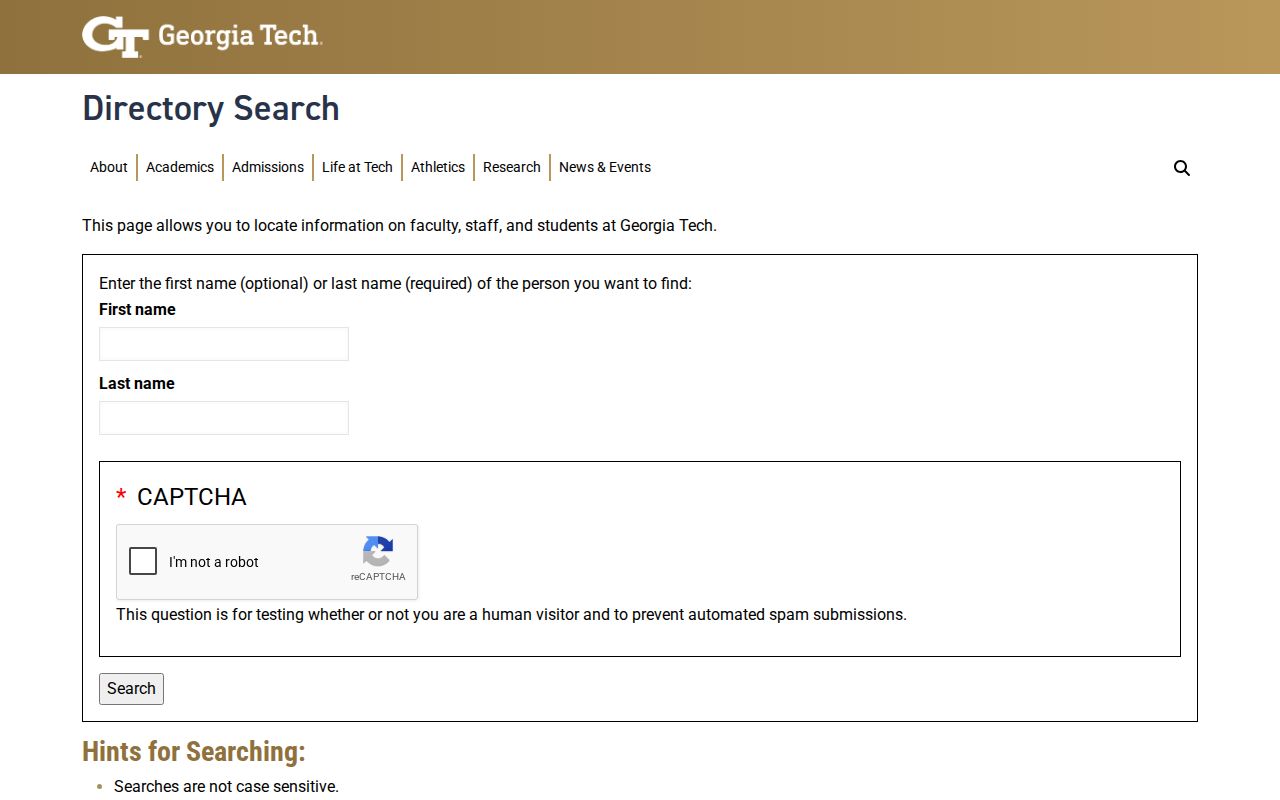
Its separate search-form capture helps distinguish individual name queries from department browsing.
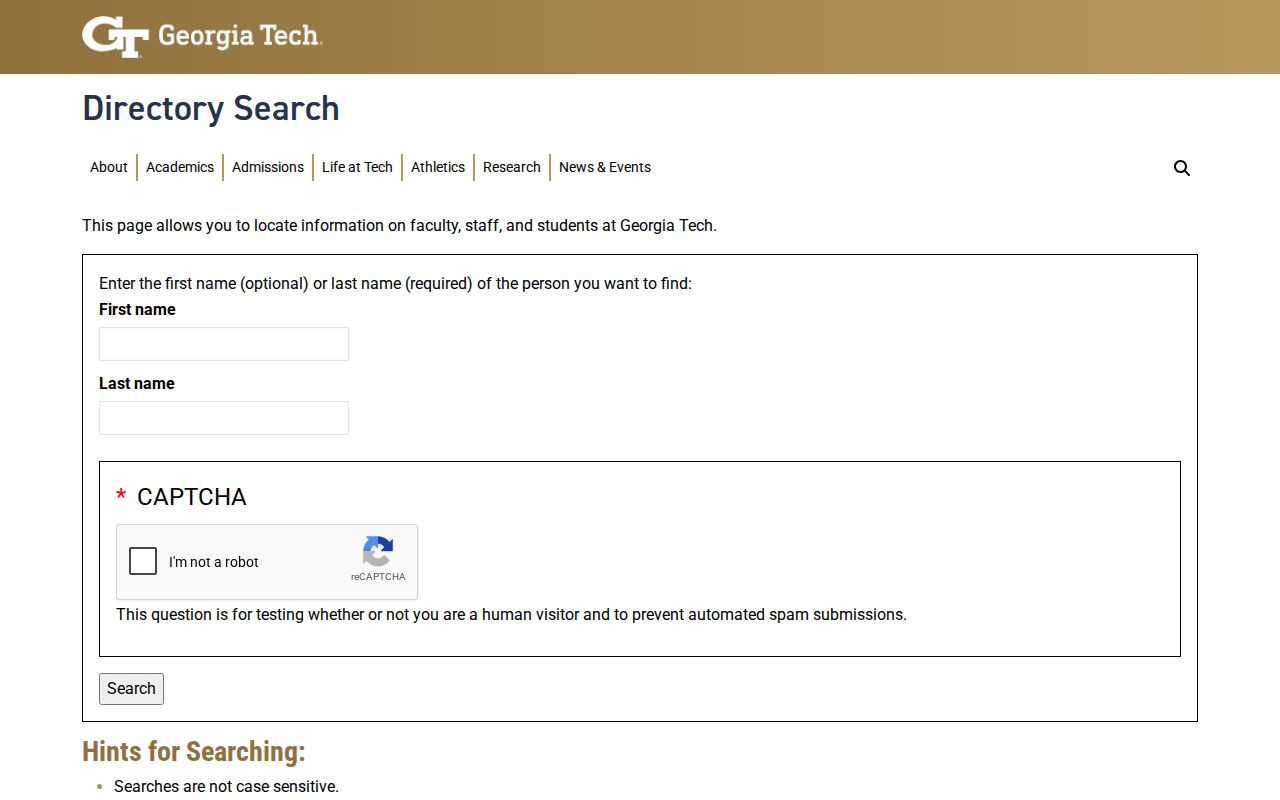
Both views lead to the same institution-managed records and remain subject to campus privacy controls.
Atlanta Property Owner Directories
The Fulton Enhanced Property Search acts as an owner directory for parcels in Fulton County. Search by owner name, parcel ID, or property address. A result can connect the owner, mailing address, physical location, parcel identifier, legal description, value, tax district, exemptions, sale history, and building characteristics.
Physical location and mailing address answer different questions. The situs address is the parcel itself; the mailing address is where a tax notice goes. Neither proves that an owner lives there. Atlanta also extends into DeKalb County, and an Atlanta mailing label may fall outside city limits. Confirm the parcel's county before treating an absent Fulton result as evidence that no property exists.
Note: Use Fulton GIS to view boundaries, but confirm ownership against the assessor parcel card and recorded deed.
Atlanta Deed Name Directories
The GSCCCA Real Estate Index turns recorded land instruments into a statewide name directory. Grantor means the party transferring an interest. Grantee means the party receiving it. Search modes include name, book and page, instrument type, date, and property-related fields. Standardized online coverage reaches at least January 1, 1999, with historical data added over time.
- Grantor
- The person or entity conveying a recorded interest.
- Grantee
- The person or entity receiving that interest.
- Book and page
- The clerk's reference for locating the recorded instrument.
- Index
- A finding aid that points to the record; it is not the certified record itself.
A typical index entry shows party name, role, document type, filing and instrument dates, county, book and page or instrument number, legal or property text, and image availability. Older Fulton names may require the clerk's deed books and grantor-grantee indexes. This directory identifies recorded parties, not all residents at an address.
Atlanta Professional License Directory
The Georgia professional license verification directory covers board-regulated professions. A search can use profession, license type, first or middle name, last name, or license number. Partial names allow a trailing asterisk. The official instructions advise that less input often produces better results.
| Entry field | What the Atlanta directory result shows |
|---|---|
| Licensee | Published name and profession |
| Credential | License type and number |
| Status | Current standing, issue date, and expiration date |
| Place | City and state when published |
| Board record | Regulating board and public order or discipline links when present |
Bulk rosters may add ZIP and county, but expressly omit phone, email, and personal mailing address. That makes verification useful for confirming a credential without turning the record into a private contact list. The manifest capture documents the official search criteria.
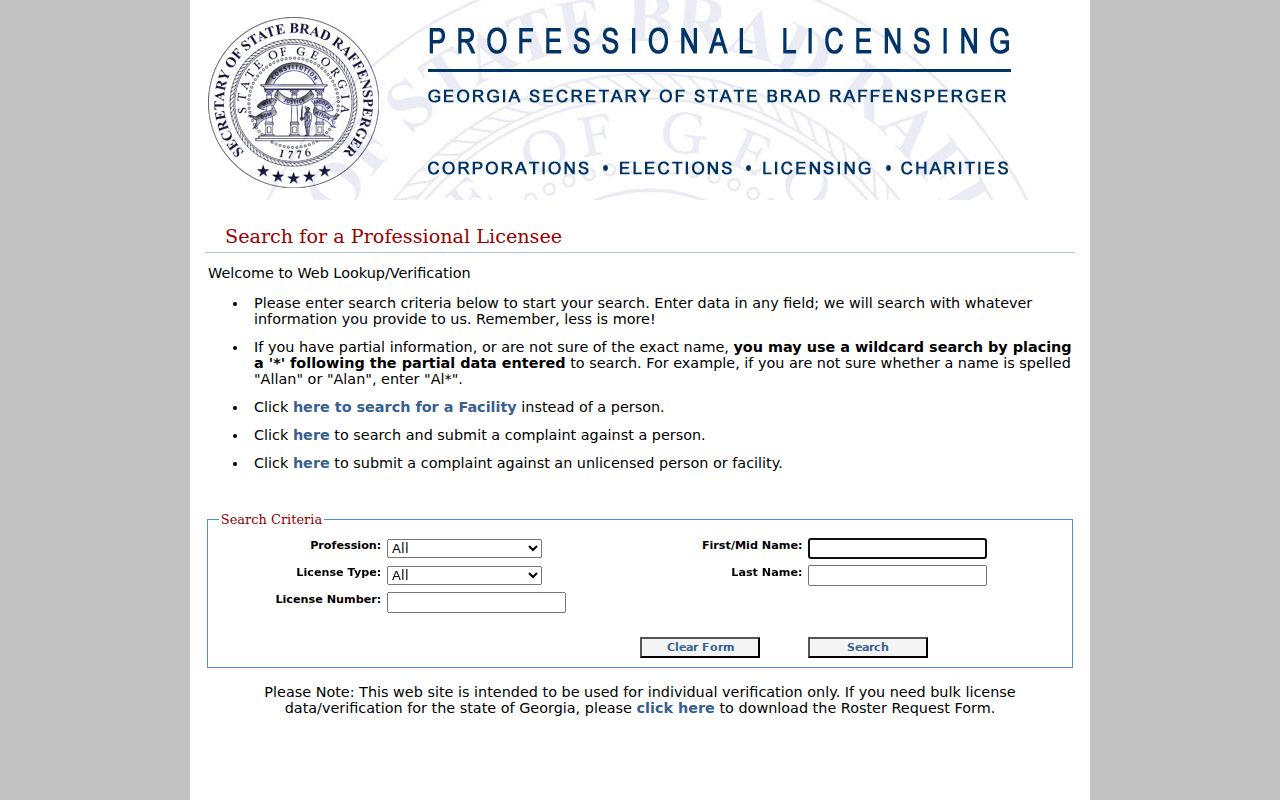
The returned credential should be compared by number and profession, especially when names are common.
Atlanta Business People Directories
The Georgia business search links people to filed entities. Its match choices are Starts With, Contains, and Exact Match. Search by business name, control number, registered agent, officer, or designated agent. Results may show legal entity name, type and status, control number, formation jurisdiction and date, principal office, registered agent, officers, and filing history.
Officer and agent modes are useful when one person is connected with several entities. Fulton Clerk trade-name filings can connect an assumed business name with its proprietor, while GSCCCA UCC searches identify parties in financing-statement indexes. These are filing directories. A listed agent or officer role should not be stretched beyond what the dated filing says.
Note: Restaurant, alcohol, and contractor records may name operators, but their issuing agencies and current portals differ by license type.
Atlanta Historical Directory Timeline
Fulton County Library's city directory collection is Atlanta's core address-and-name source. City and suburban volumes span 1859-60 through 1991, when publication ceased. Haines criss-cross directories reverse the search key, letting a reader start with a street, address, or telephone geography for 1946 through 2016-17.
- 1859-60: The earliest described holdings begin; an Archives guide identifies the 1859 Williams volume as the first conventional directory.
- 1867: The library page separately calls this the first Atlanta City Directory in the collection, a catalog wording difference worth retaining.
- 1946: Haines reverse-directory coverage begins.
- 1991: Atlanta city-directory publication ends.
- 2016-17: The Haines run reaches its last listed period.
A city entry may show surname, spouse, occupation or trade, home address, and a business listing. Compare consecutive years to bracket a move, but allow for publication lag and omissions. The library screenshot records the published holdings statement.
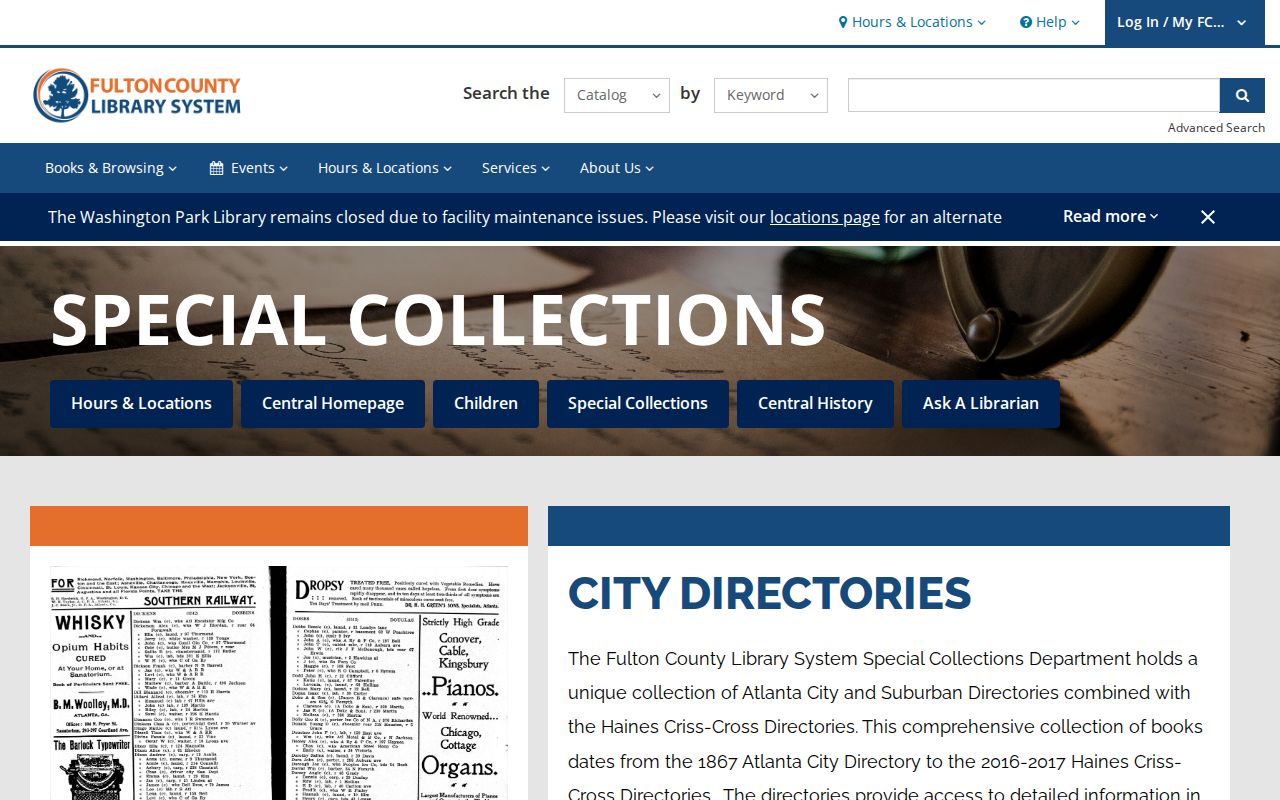
The collection is walk-in, so email Library.SpecColl@fultoncountyga.gov before a focused visit if the target year is uncertain.
Atlanta Directory Address Traps
Atlanta address searches can fail even when the right directory is open. Peachtree variants, duplicated names, and NE, NW, SE, or SW suffixes matter. The 1892 street renaming and renumbering program also means a historic number may not map cleanly to its modern form. Preserve the spelling and direction printed in each source, then compare maps and adjacent directory years.
A striking example comes from the 1927-1929 viaduct project, which raised Central and Pryor and later Alabama and Wall streets. Original storefront levels became part of Underground Atlanta. Georgia State archivists used city directories and Sanborn maps to identify businesses in nearly 100 glass-plate images. It is a practical lesson: an old address can be correct even when the present streetscape looks entirely different.
The Georgia History collection adds maps, census microfilm, newspapers, public documents, and vertical files.
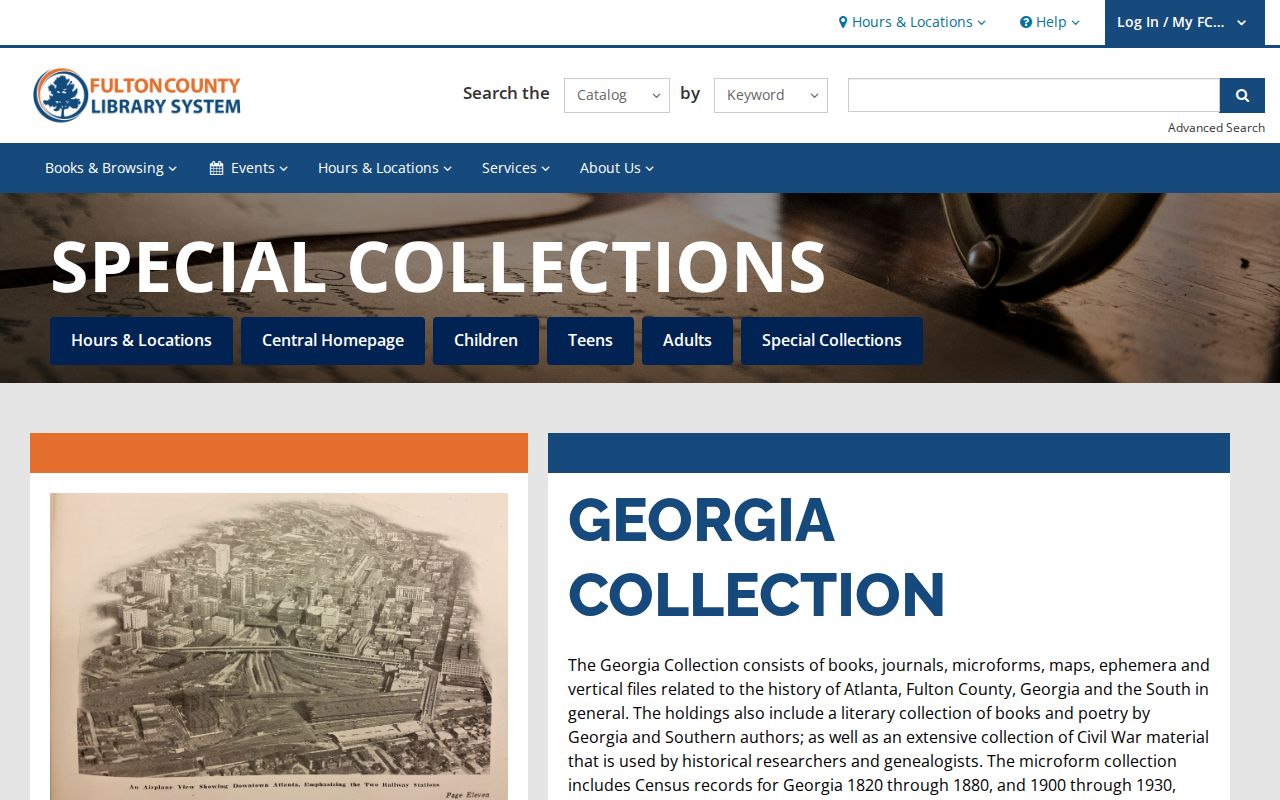
Those sources help reconcile a name when street changes break a simple directory lookup.
Atlanta Archive Directory Networks
When formal Atlanta people directories end, institutional collections extend the trail. The Central Library Special Collections holds genealogy, Georgia history, and directory material. Walk-in research is listed for Monday through Friday from 1 to 5 and every third Saturday from 1 to 5; archival work requires an appointment.
The genealogy collection includes county and family histories, passenger lists, cemetery and vital material, immigration and military sources, census records, newspaper clippings, and licensed databases. Its captured overview shows the local access point.
The broader Special Collections page explains how those formats sit beside the city directories.
Atlanta History Center, Auburn Avenue Research Library, Georgia State, Emory, Georgia Tech, and Atlanta University Center add manuscripts, yearbooks, rosters, oral histories, and photographs.
The Kenan Research Center family-history overview documents another major Atlanta route.
Its manuscripts and local collections can supply the names that a published volume omits.
The Atlanta History Center ALBUM provides text-searchable issues of The City Builder and Atlanta History.
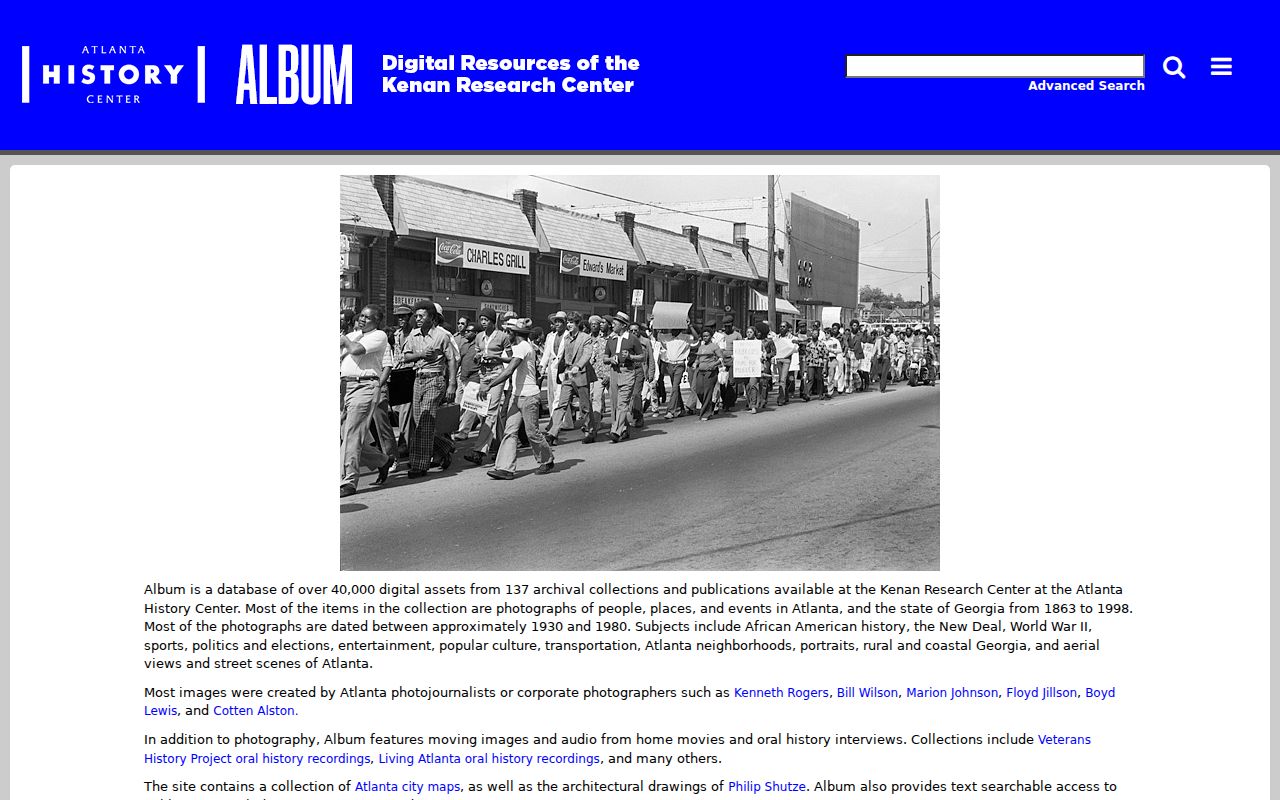
More than 300 City Builder editions from 1916 through 1961 form a useful civic and business name index.