
Atlanta Public Record Boundaries
Open access depends on the record, not just the agency holding it. Fulton County publishes land indexes, assessment facts, many docket entries, tax accounts, and statutory registry data. Other material requires a written request or a visit to the custodian. A portal result is usually an index or working government record. It is not automatically a certified copy.
| Record set | Atlanta-area custodian | Online route | Access level |
|---|---|---|---|
| Deeds, liens, and plats | Fulton Superior Court Clerk | GSCCCA index, at least 1999 statewide coverage | Public index; images subject to account terms; clerk copies available |
| Civil and criminal cases | Municipal or Fulton court clerk | Court-specific provider through Georgia E-Access | Public docket portions; sealed and protected material withheld |
| Assessment and parcel roll | Fulton Board of Assessors | Enhanced Property Search and GIS | Free public administrative data |
| Birth and death records | Fulton Board of Health or Georgia DPH | No open modern name index | Certificates and cause-of-death fields have eligibility limits |
| Estates and marriage licenses | Fulton Probate Court | Online scope varies | Counter or copy request, with protected matters withheld |
| Custody and registry data | Fulton Sheriff, GDC, or GBI | Agency lookup tools | Current public fields; agency verification is the fallback |
Georgia law also protects adoption files, much juvenile material, sealed cases, medical data, account numbers, and other identifiers. Military discharge records carry special privacy limits. Agencies should redact protected fields and release separable public portions when practical.
Atlanta Deed Index Access
The Fulton clerk is the official recorder. Georgia does not use a separate recorder-of-deeds office here. The GSCCCA Real Estate Index acts as the statewide discovery layer, while the clerk keeps the official Fulton instruments. Standardized online deed-docket content reaches at least January 1, 1999, and older historical data is added over time. That date is an online-index minimum, not the first surviving Fulton deed.
| Search control | Input | How it narrows Atlanta records |
|---|---|---|
| Name Search | Party name | Finds grantor or grantee entries; spelling variants can matter |
| County and dates | Fulton plus date range | Limits statewide results to the likely filing place and period |
| Party or instrument type | Indexed role and document class | Separates deeds, liens, and other recorded instruments where supported |
| Book/Page | County book and page | Goes straight to a known docket reference |
| Property mode | Subdivision, unit, block, or lot | Uses legal-index elements where Fulton data supports them |
The result can show parties, role, instrument type, recording date, property information, and deed book/page. Read the image or obtain a certified copy before relying on signatures, legal description, or notary data.
The official GSCCCA search screen shows the available modes and account-dependent controls.
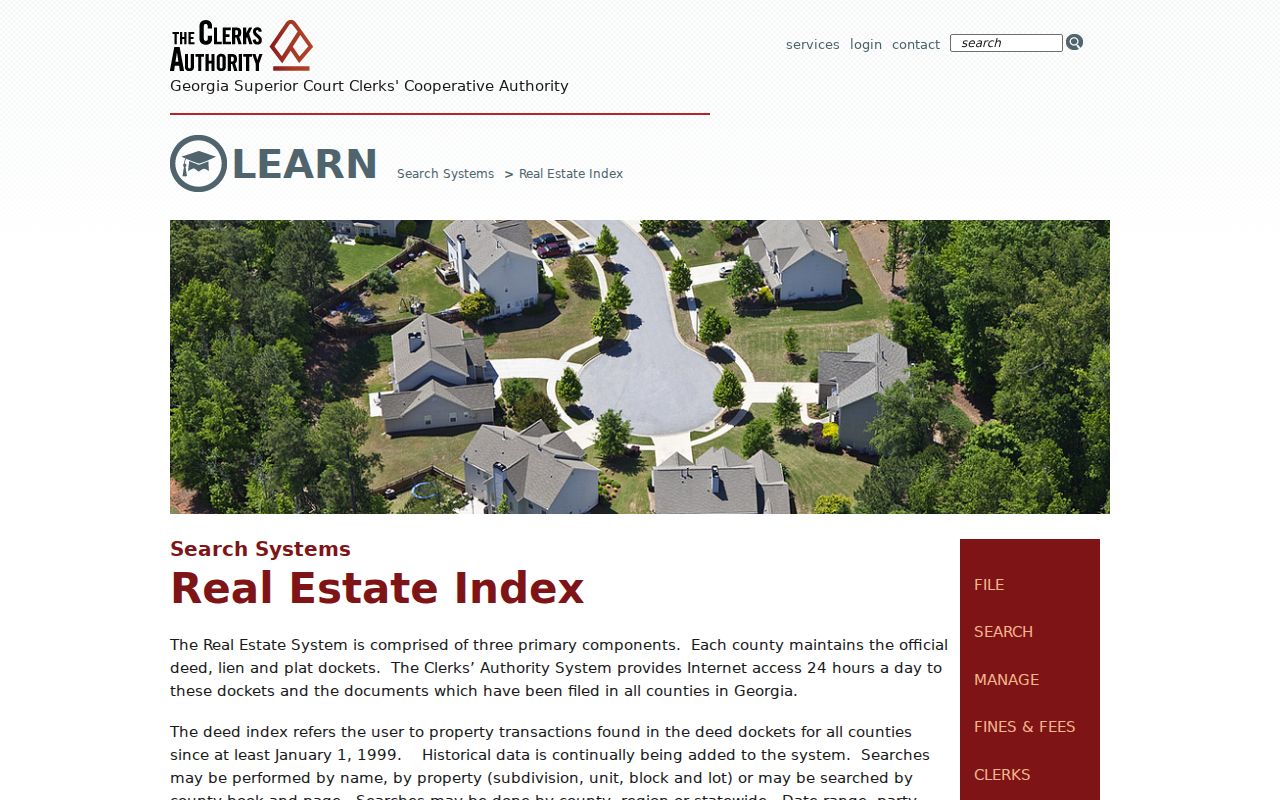
The screen separates name, book-page, property, and instrument searches, which helps prevent a broad statewide result set from hiding the relevant Fulton filing.
Atlanta Property Record Layers
The Fulton Board of Assessors Enhanced Property Search accepts owner name, parcel ID, or property address. A parcel summary may display the owner and mailing address, the site address, parcel ID, legal description, tax district, values, exemptions, sales, building traits, and map links. A situs address is the physical location; it can differ from the owner's mailing address.
The assessor roll is an administrative valuation record. Fulton GIS adds boundary and parcel context, but a map pin is not a deed. Confirm the parcel ID against the recorded instrument. Atlanta also touches DeKalb County at its eastern edge, so a parcel outside Fulton must follow that county's custodian chain.
The assessor's property-search landing page provides the official entry point.
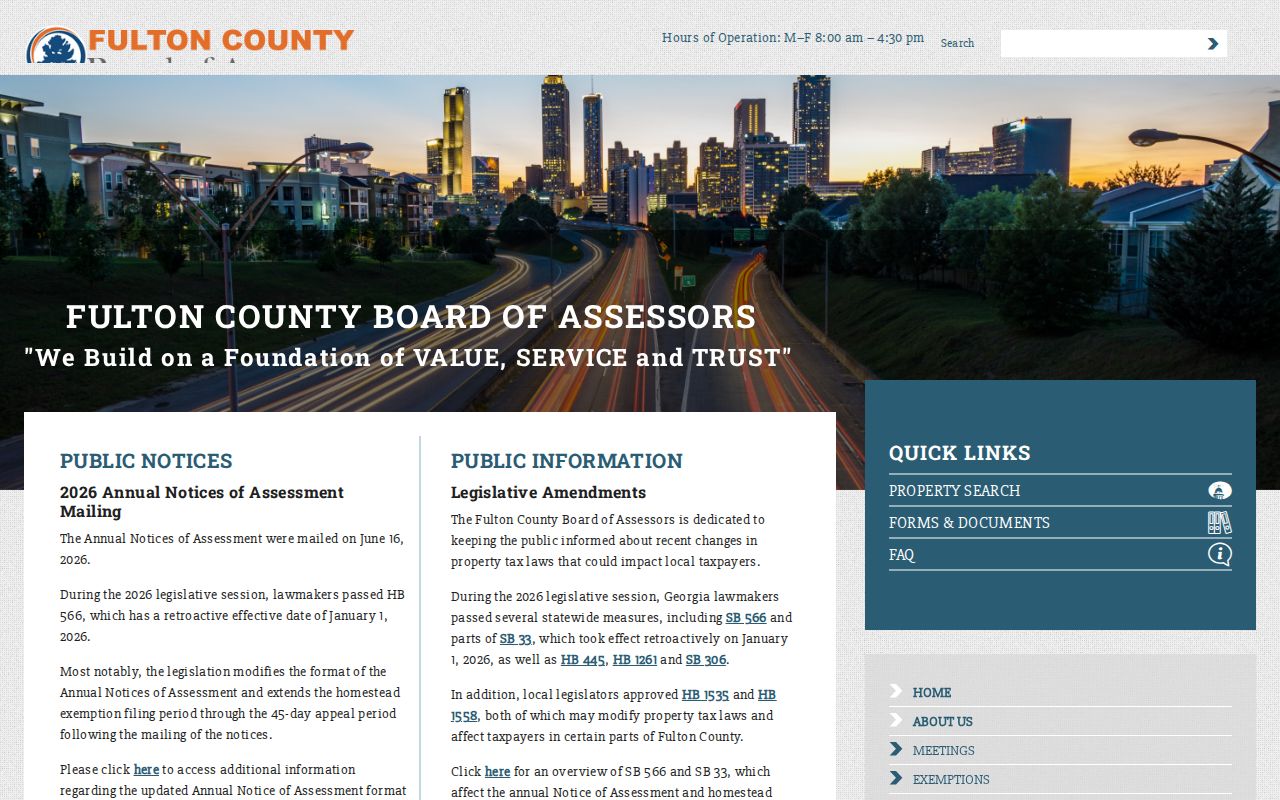
Its parcel key connects the assessment roll to the GIS layer and the deed book-page trail without treating any one layer as conclusive.
Note: A homestead exemption is evidence of a claimed tax status, not proof that a named owner is present now.
Atlanta Court Record Channels
Atlanta court records are split by jurisdiction. Municipal Court handles traffic, city ordinance, and related local matters. Fulton Magistrate, State, Superior, and Probate courts each keep their own case types. Federal Atlanta cases run through the Northern District of Georgia and PACER. The Georgia Courts E-Access directory points to court-specific providers, often requiring an account, rather than offering one complete statewide name search.
A docket may show the court, case number, case style, parties, lawyers, filing date, status, judge, events, hearing data, and disposition. A docket is the chronological case-event list. It does not replace the signed order or full clerk file. Archived files may need advance retrieval, and public terminals can expose detail not indexed on the open web.
The official provider directory shows why the court and case type must be known first.
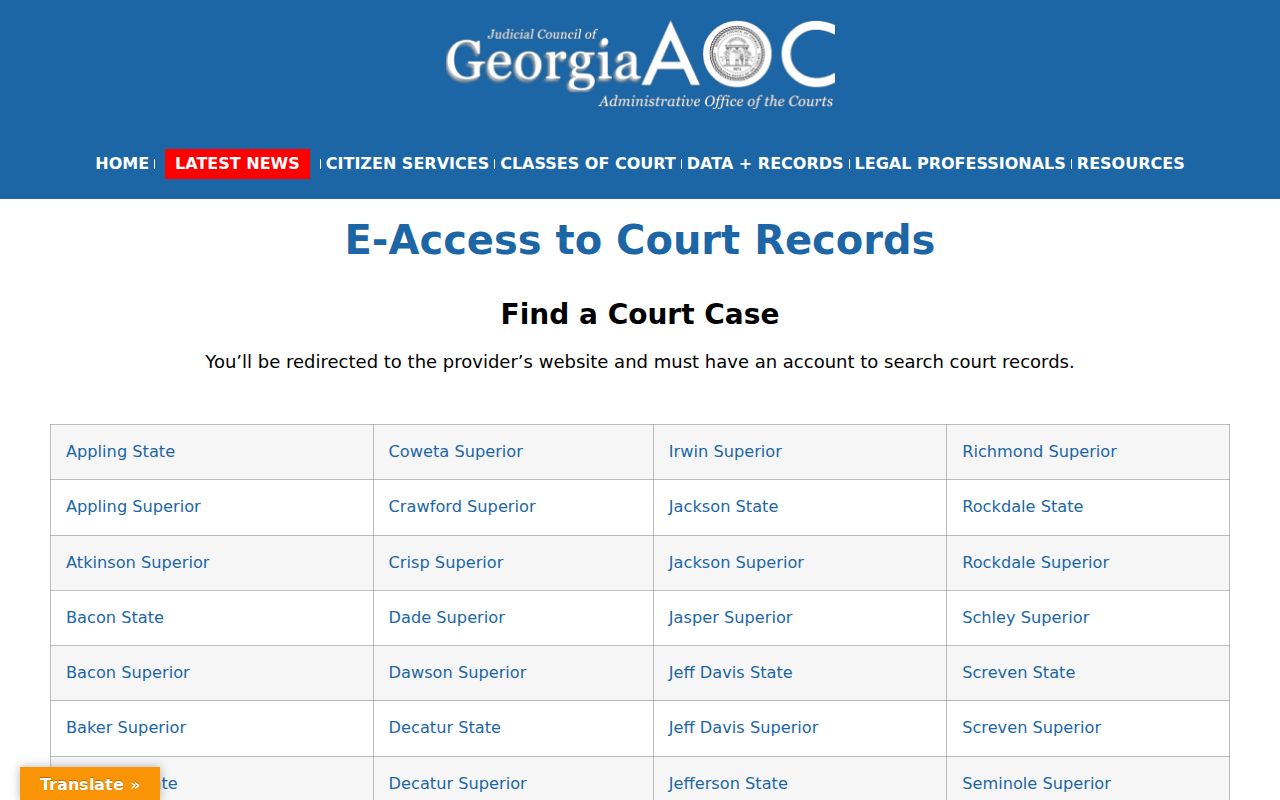
Use the resulting case number when asking the proper clerk for a pleading, disposition, or certified copy.
Atlanta Vital Record Restrictions
Modern birth records do not have an unrestricted public name index. Eligible requesters must apply to Fulton vital records or Georgia DPH with identification. A public plain-paper death record can omit the Social Security number, while certified copies and cause-of-death information have relationship or tangible-interest limits. Marriage licenses belong with Fulton Probate Court, and divorce decrees remain Superior Court records.
Historical access follows a different track. Atlanta began death registration in 1889 and birth registration in 1896, before statewide death registration began in 1919. The Georgia Archives holds digitized early state death certificates and other historical sources. For modern orders, the Georgia DPH Vital Records route sets out current forms and channels.
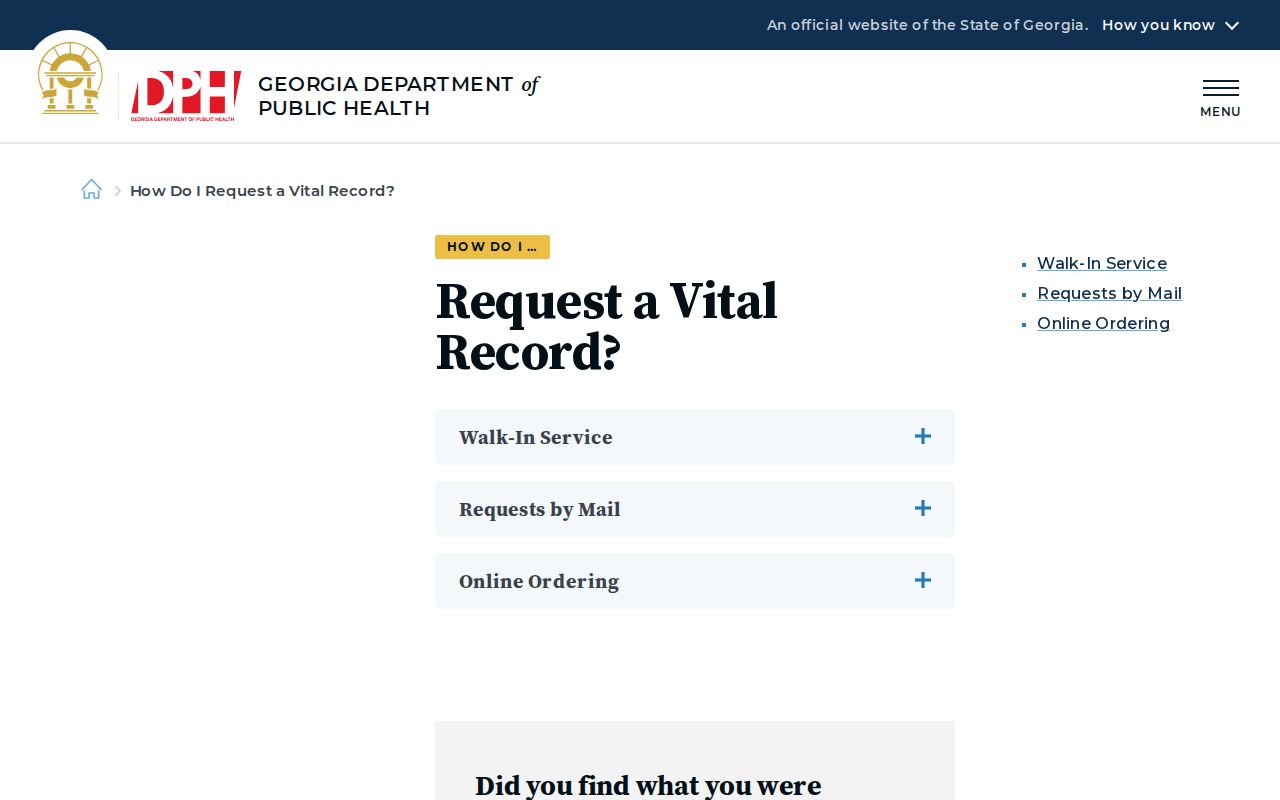
The state page distinguishes a certificate request from historical research and routes each record type to its current procedure.
Atlanta Public Records Custodians
The right office changes with the record series. Downtown clerk record rooms handle deeds and court copies, the assessor maintains valuation data, and city government routes its own administrative files through an open-records channel. Calling with a broad research question may not produce a search. A document type, book/page, parcel number, case number, date range, or existing report name is far more useful.
Fulton Superior Court Clerk
136 Pryor Street SW, Ground Floor
Atlanta, GA 30303
404-613-5313
Fulton Board of Assessors
Property ownership, values, traits, and exemptions
404-612-6440
Enhanced Property Search and assessor assistance
Atlanta Municipal Court
150 Garnett Street SW
Atlanta, GA
404-954-7914
Traffic, ordinance, and municipal case records
Fulton Probate Court
Estates, wills, guardianships, and marriage licenses
404-613-4070
Portal scope varies; use counter or copy request
Atlanta Record Copy Costs
Georgia Open Records Act labor generally uses the hourly salary of the lowest-paid full-time employee able to search, retrieve, and redact the file. The first quarter-hour is free. Letter- or legal-size copies generally cost no more than ten cents per page unless another statute authorizes a different schedule. Electronic production should use the cheapest reasonable means.
Clerk-certified records follow a special schedule. Fulton lists unassisted plain copies at $0.50 per page, clerk-assisted copies at $1 per page, and certified or exemplified copies at $2.50 for the first page plus $0.50 for each added page. Oversize plats are $2 per page. A mailed deed request should name the document type and book/page. Vital certificates have their own DPH schedule and eligibility rules.
Cost control. Ask for an estimate and request contact before work exceeds a stated ceiling. A broad archive search can create labor charges even when few pages are produced.
Atlanta Custody Record Checks
Fulton jail data, Georgia prison data, and the statutory offender registry are separate systems. A jail entry is a current custody snapshot and an arrest is not a conviction. The Georgia DOC offender query can search by name, description, ID, or case number. Results may include status, location, sentence, conviction county, and release information, subject to agency limits.
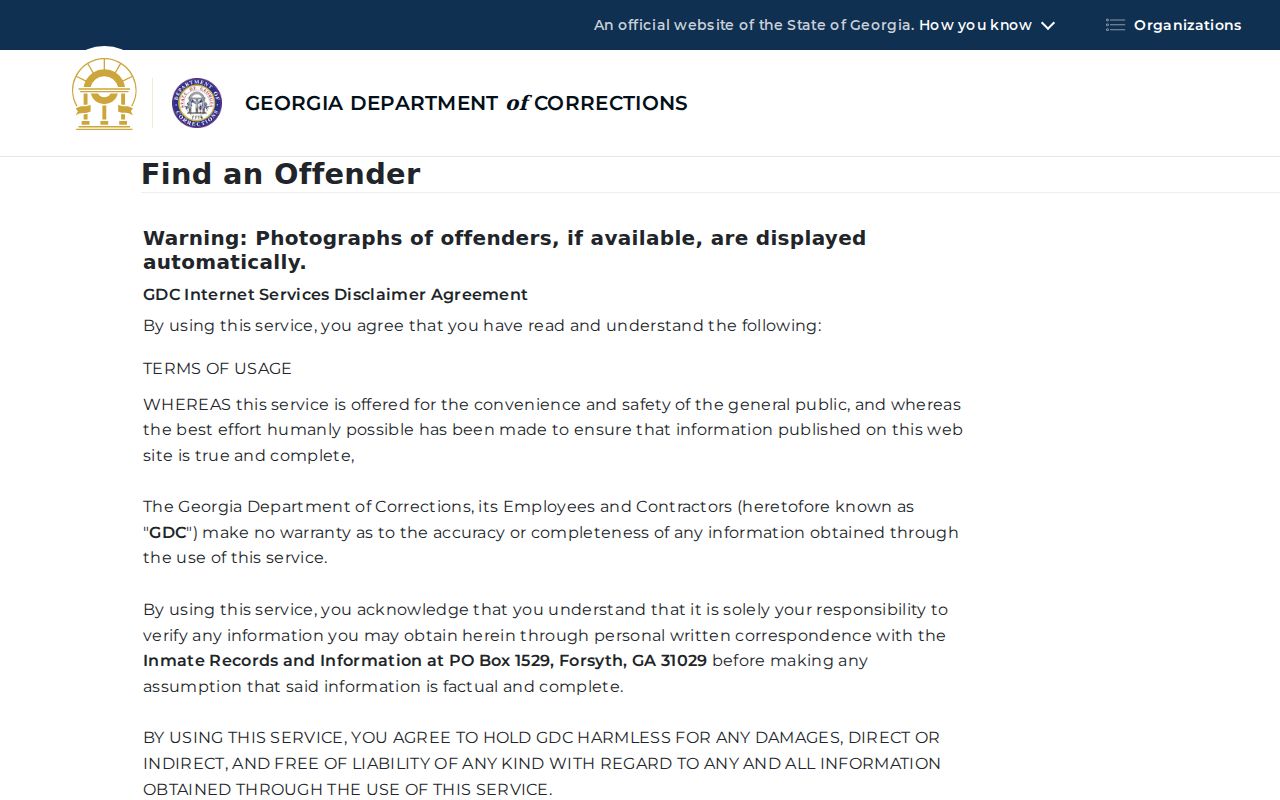
GDC warns that online data may be incomplete, so written agency verification is the stronger source when identity or status matters.
The GBI registry is maintained from records supplied by contributing agencies under O.C.G.A. § 42-1-12. Use it only for lawful public-safety purposes and follow its cautions.
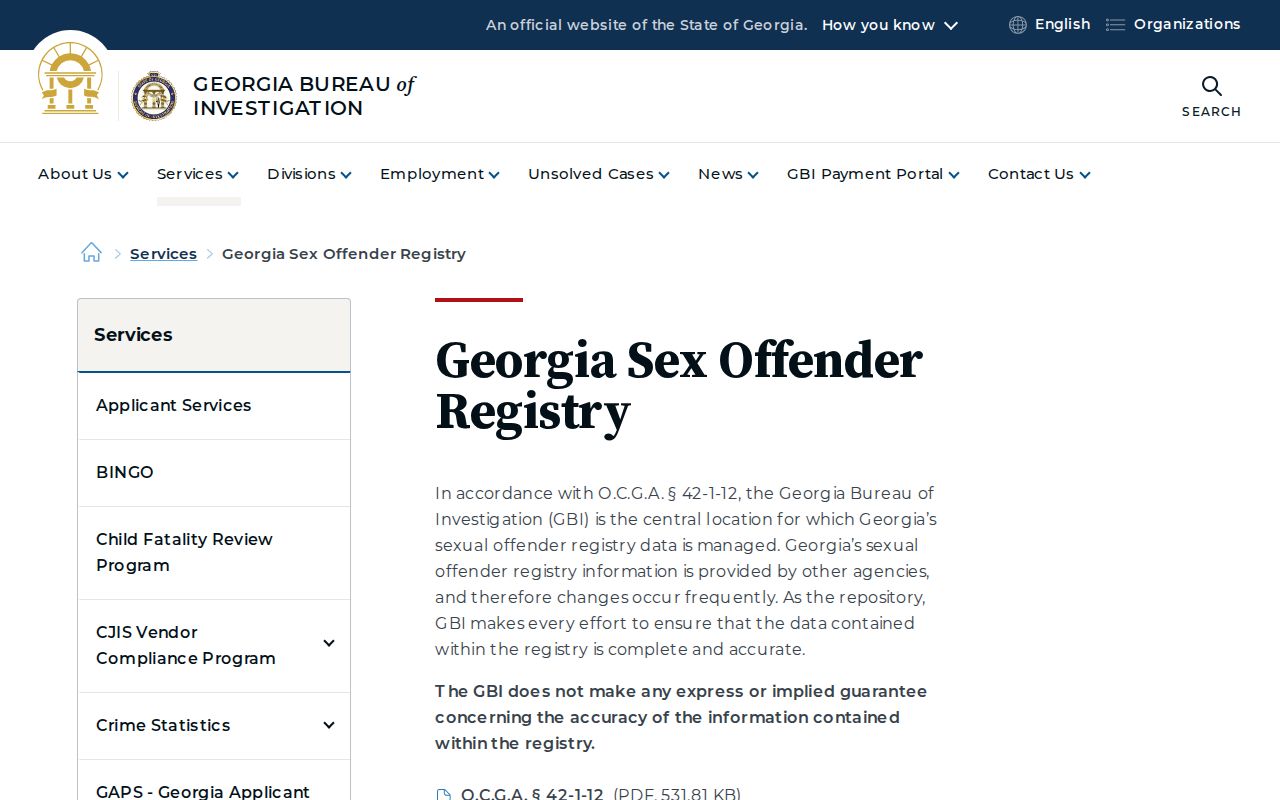
A missing result is not proof of no history because qualifying law, data transfer, record status, and search spelling can all affect the result.
Atlanta Records Terms Decoded
Knowing what an office publishes helps set the right evidentiary expectation. These terms separate a search aid from the formal record held by the custodian.
- Index
- A searchable pointer listing facts such as party, date, type, and book/page.
- Image
- A scan of the filed instrument, which may be viewable under portal terms.
- Certified copy
- A clerk-issued copy formally attested as a copy of the office record.
- Custodian
- The agency or office responsible for keeping and producing a record.
- Exemption
- A specific legal basis permitting or requiring information to be withheld.
Search results should also be matched carefully. Compare middle initials, dates, roles, addresses, parcel or case numbers, and associated people before treating a same-name entry as the same person.
Atlanta City Request Routing
City records include municipal administration, planning, building, code, legislative, and local agency material. Atlanta's online request portal routes many requests, but specialized planning and building records use the responsible department and its existing file names. The Atlanta open-records portal is the verified city entry point.
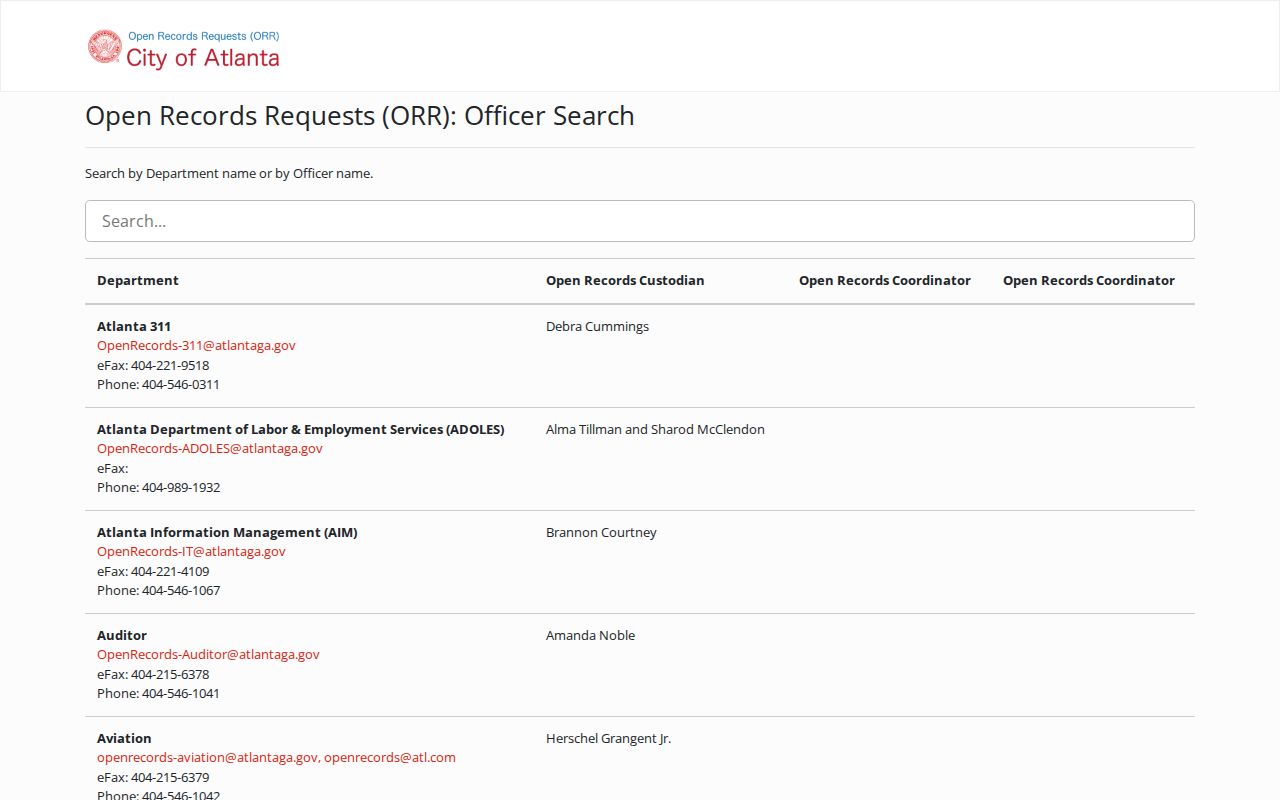
The portal does not erase custodian boundaries. City files stay with Atlanta, while deeds, most trial-court files, tax records, and probate matters remain Fulton responsibilities.
Note: An agency must produce existing records, but it need not research a family, answer questions, or create a custom report.
Atlanta Records Behind Old Addresses
Historic addresses can fail in a modern parcel search even when the underlying record survives. Atlanta has unusually useful repair tools: an official 1930 house-numbering map revised in 1933 and WPA cadastral sheets from 1938. The sheets show property and building lines, tax boundaries, roads, rail and streetcar features, streams, institutions, and house numbers.
This matters around places reshaped by major work. The 1927 to 1929 viaduct project raised parts of Central, Pryor, Alabama, and Wall streets, leaving old storefront levels beneath what became Underground Atlanta. Archivists later paired city directories and Sanborn maps with nearly 100 glass-plate images to identify businesses. The lesson is practical: when a street address disappears, test maps, plats, deed descriptions, and period directories before concluding that no record exists.
File an Atlanta Records Request
Any person may request records under the Georgia Open Records Act, O.C.G.A. § 50-18-70 et seq. No special words, purpose statement, or universal form is required. The agency must respond within three business days by producing the records or describing when they will be available. If it withholds material, the response should cite the legal basis. Three days is a response deadline, not a promise that a large archived file will be delivered by then.
- Identify the government and custodian. Send city permit files to Atlanta, but send Fulton deeds to the Superior Court clerk.
- Search an available index first. Capture the case number, parcel ID, book/page, report number, or exact record series.
- Write a narrow date-bounded request. Give relevant names, addresses, identifiers, and the desired electronic format.
- Ask for a cost estimate and a warning before charges pass a set limit. Request nonexempt portions after redaction.
- Keep the request and response. If denied, ask for the exact exemption, search locations, date scope, and release of separable material.
The Georgia Attorney General's open-government process may help with mediation or enforcement, and superior-court relief may be available. A records request is not a subpoena and cannot override a record-specific confidentiality law.
Lawful use. Atlanta public records support civic review, family research, estate work, consumer safety, and other lawful personal aims. Never use a record to stalk, harass, threaten, or harm anyone.